

Residential Duct Installation in Philadelphia
You can buy a perfect system and still feel nothing upstairs. Ductwork is what decides whether the air your equipment produces actually arrives where you live. Teva HVAC designs, installs, replaces and seals residential ductwork across Philadelphia, measured and tested rather than guessed.
- Licensed Philadelphia contractor, mechanical permits filed through L&I eCLIPSE
- Duct sizing designed to ACCA Manual D, not improvised on site
- Static pressure and airflow measured before and after every job
- Sealed with mastic and UL listed tape, never standard duct tape
- Fully insured, with coverage current on file with the city
- 20 years working in Philadelphia basements and attics
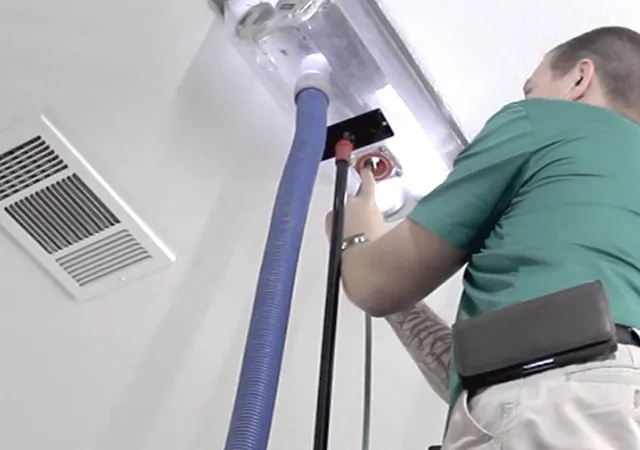
How Much of Your Heating and Cooling Never Reaches the Room?
More than most homeowners would believe. Typical residential duct systems lose 20 to 30 percent of the conditioned air passing through them, and systems running through unconditioned attics or crawlspaces regularly exceed 35 percent. Put that together with undersized runs and you get a striking result: a three ton AC system connected to poor ductwork can deliver closer to two tons at the registers. The homeowner assumes the equipment is too small, buys bigger next time, and repeats the whole cycle.
Teva HVAC LLC treats ductwork as a designed system rather than as pipework to be threaded wherever it fits. We calculate the airflow each room actually needs, size the trunks and branches to carry it, and measure static pressure to confirm the blower is not fighting the duct it feeds. Sealing is done with mastic, returns are sized properly instead of being an afterthought, and we show you the readings before and after. It is unglamorous work that quietly decides how every other part of the system performs.
We swap out old, collapsing central lines for sturdy new ones that improve total airflow throughout your space.
Our team installs high-quality flex pipes in tight attic spaces to ensure air reaches every corner of your house.
We work around your timing, making installation easy and convenient for your busy life.
Our Services
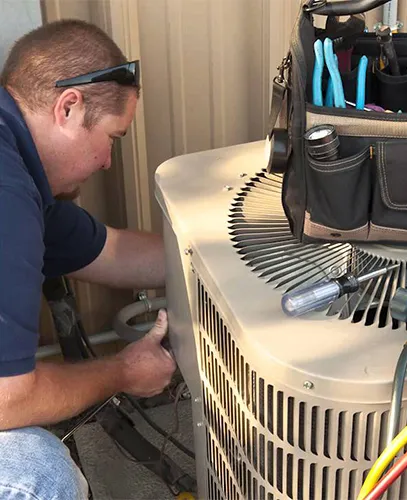
HVAC Installation
Our team sets up complete climate control systems to keep your home cozy. We handle everything from start to finish.
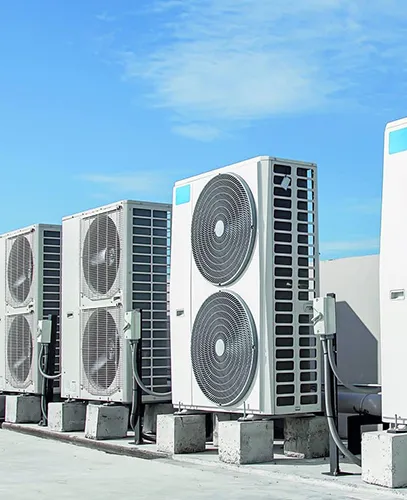
AC System
Stay cool all summer with a high-efficiency unit. We install powerful air conditioners that beat the heat every time.
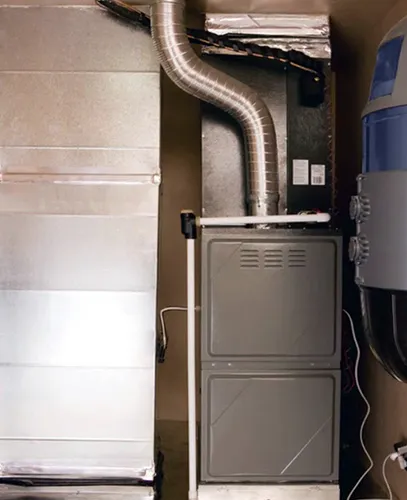
Heating System
Keep the winter chill away with a reliable furnace. We make sure your family stays warm on the coldest nights.
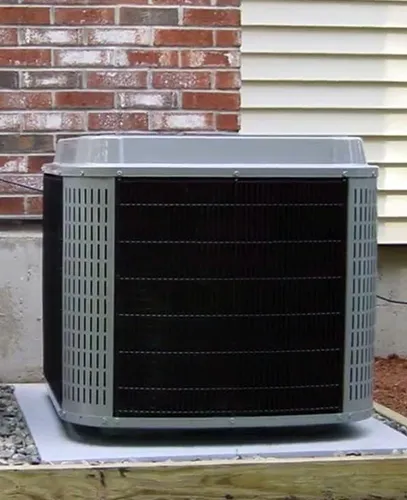
Cooling System
Enjoy refreshing air without the high energy costs during the summer. We provide modern cooling setups that run quietly.
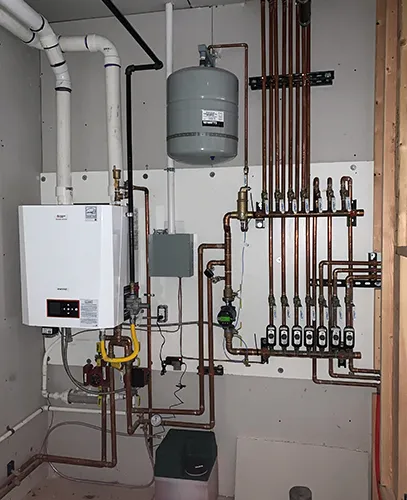
Boiler System
Get steady heat through your radiators with our expert boiler work. It is the perfect solution for older local homes.
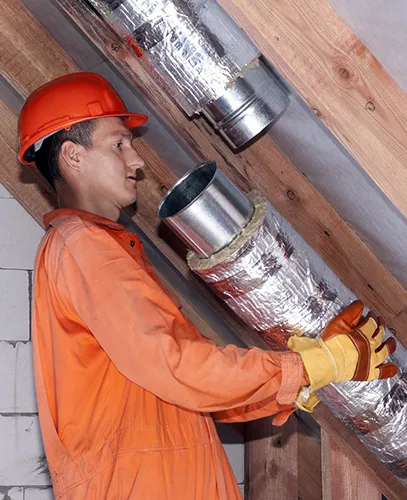
Duct Installation
Clean, strong ducts make airflow better. Our professional installation keeps your home comfy and your energy bills low.
Should You Seal, Repair or Replace Your Ductwork?
Replacement is not always the answer, and knowing the difference saves real money:
Condition | Usual Answer | Why |
|---|---|---|
Leaky joints, sound metal | Seal | Mastic on takeoffs and plenums recovers most of the lost air cheaply |
Crushed or kinked flex runs | Repair | Replacing the affected sections restores airflow without a full rebuild |
Undersized trunks or branches | Replace those runs | No amount of sealing fixes a duct too small to carry the volume |
Panned joist cavity returns | Replace | These leak heavily and are close to impossible to seal properly |
Rusted, sagging or asbestos wrapped | Replace | Specialist removal first, then a designed system in its place |
Our guide to common HVAC problems and solutions covers the symptoms that usually turn out to be duct related.
Why Choose Teva HVAC for Your Ductwork
Choosing reliable Philadelphia residential duct installation services makes a huge difference for long-term comfort.
Designed, Then Installed
We calculate what each room needs before we size a single run, because ductwork improvised on site is the reason most homes have a room nobody uses in summer.
Measured Before and After
Static pressure and airflow readings are taken at the start and the finish, so the improvement is something you can see rather than something we claim.
Sealed the Way It Lasts
Joints are sealed with mastic and UL listed foil tape, since ordinary duct tape dries out and lets go within a few years.

Detailed Ductwork System Evaluation
How Do You Know the Ductwork Is the Problem?
These symptoms point at the ducts rather than the equipment, and all of them are commonly misdiagnosed:
- One room never keeps up. That branch is undersized, crushed, disconnected or too long.
- The system runs constantly but the house feels average. Conditioned air is escaping before it arrives.
- Registers barely breathe. Usually restricted returns rather than a weak blower.
- Dusty rooms soon after cleaning. Leaky returns pulling air from basements and wall cavities.
- Whistling or roaring at the vents. Air being forced through ducts too small for the volume.
A full cooling system assessment separates these from equipment faults before anyone spends money on new hardware.
Our Ductwork Process
We measure static pressure, check airflow at the registers, and inspect the existing runs and returns.
You get a layout with the airflow targets per room, priced in full, before any work is scheduled.
We build and seal the system, then retest so you can compare the readings against where you started.
We run your system to verify that every vent delivers the exact right amount of comfort.
Why Is Return Air the Most Common Duct Defect?
Because it is invisible, and because it was cheap to skip when the house was built. A blower has to pull as much air back as it pushes out, so a system starved on the return side cannot deliver on the supply side no matter how good the equipment is. A three ton system needs roughly 1,200 cubic feet per minute coming back to it, which takes far more grille area than most homes have.
Older houses often used panned joist cavities as returns, meaning the gap between floor joists was boxed in and used as a duct. Field testing has measured leakage in those between 27 and 91 percent, and they are extremely difficult to seal. Adding proper return paths is frequently the single highest value change we make to a house.
frequently asked questions
Rarely, and it is the most oversold service in this trade. Cleaning removes dust from the inside of the ducts, which can help air quality if there has been construction work or a rodent problem. It does nothing about leaks, undersized runs or restricted returns, which are what actually cause weak airflow. If a company promises better performance from cleaning alone, ask them what your static pressure reading is first.
It sounds sensible and usually backfires. Closing registers raises the pressure inside the duct system, which forces more air out through every existing leak and makes the blower work harder against the resistance. On many systems it reduces total airflow enough to affect the equipment itself. If certain rooms genuinely need less conditioning, zoning with proper dampers is the controlled way to do it.
It is common in Philadelphia homes of a certain age, particularly around old octopus furnace ductwork and pipe insulation. It is not dangerous while intact and undisturbed, but it cannot be cut, sanded or removed as part of ordinary duct work. A licensed abatement contractor has to remove it first, and that is a separate trade with its own permitting. We identify it during the survey and tell you before anything is disturbed.
Less than people expect, though some opening is usually needed. Most routes use closets, dropped ceilings, soffits and existing chases rather than opening finished rooms. We plan and show you the route before starting, so there are no surprises. Where the disruption would genuinely be too much, a ductless system reaches the same rooms with only a three inch penetration per indoor unit.
