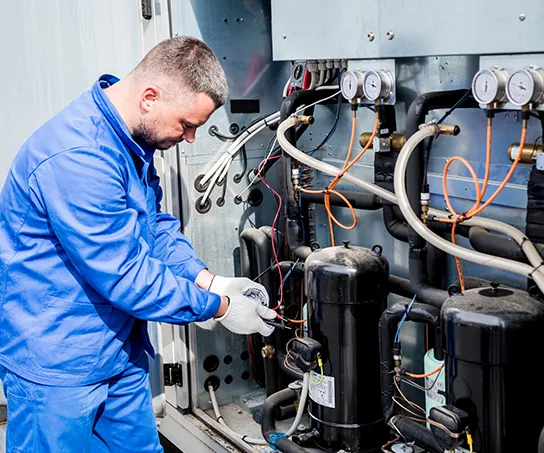
Commercial AC System Installation and Repair in Philadelphia
Two buildings of identical size can need wildly different cooling. Teva HVAC designs, installs and repairs commercial AC systems across Philadelphia, sized to what your operation actually generates rather than to a figure per square foot.
- Licensed Philadelphia contractor holding a Commercial Activity License
- EPA 608 certified technicians, trained and certified for A2L refrigerants
- Manual N commercial load calculations covering occupancy and equipment gain
- Efficiency verified against AHRI listings rather than sales literature
- Fully insured, with certificates issued direct to landlords and managing agents
- 20 years cooling Philadelphia commercial property
Commercial AC Systems in Terms of Floor Area
Because in a commercial building, the people and the equipment usually generate more heat than the weather does. Every occupant adds heat. So does every screen, light fitting, fryer, oven, server rack and display fridge. A 4,000 square foot accountancy office and a 4,000 square foot restaurant are not remotely comparable cooling problems, and a west facing glass frontage on Market Street behaves differently again from a windowless warehouse of the same area. Sizing from square footage alone is how buildings end up with units that cannot cope by two in the afternoon.
Teva HVAC LLC runs a commercial load calculation that accounts for occupancy, lighting, process equipment, ventilation requirements and solar gain by elevation. That produces a number you can defend to a landlord or a lender, and it tends to reveal that zones need different treatment rather than one oversized unit for everything. We then verify the equipment we propose against its published AHRI performance, so what appears on the quote is what the unit will actually deliver at part load in a Philadelphia summer.
We carefully assemble your commercial AC system, ensuring every part is securely connected.
After installation or repair, we configure your system settings to maximize performance, including thermostat adjustments and airflow.
We balance airflow throughout your commercial space to eliminate uneven temperatures.
Commercial AC Repair Services
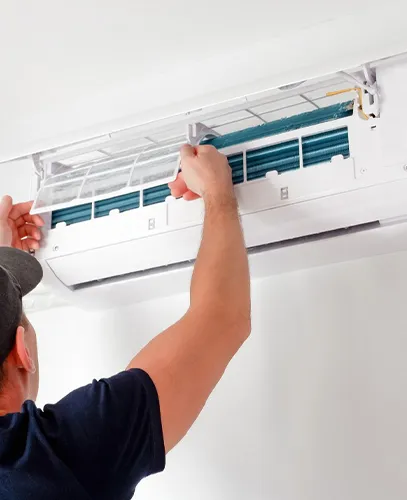
AC System
We install and repair AC systems so the place stays cool and works the way it should.
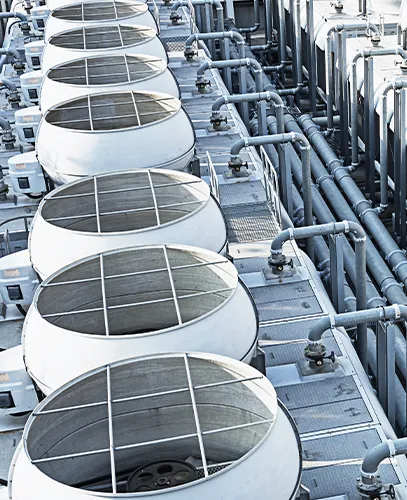
Cooling System
Our team installs the cooling systems that keep the temperature steady across the building.
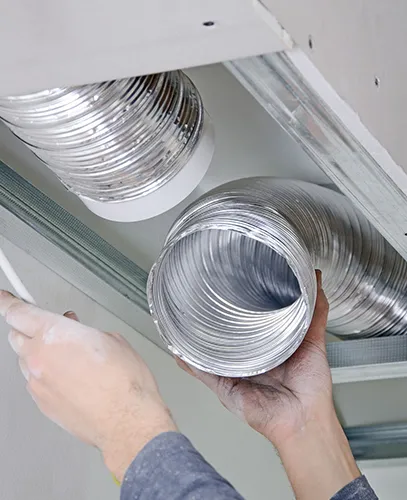
Duct Installation
We efficiently set up ductwork for your HVAC system that moves air properly from room to room.
Is Your Economizer Saving Money or Quietly Costing It?
n economizer pulls in outside air when it is cool enough to cool the building for free. When it works, it is one of the best returns in commercial HVAC. When it fails, nobody notices:
- Stuck dampers. Seized open, the unit fights untreated summer air all day at full cost.
- Failed sensors. The controller cannot tell whether outside air is usable, so it stops trying.
- Disabled deliberately. Switched off years ago to solve a comfort complaint, then forgotten about.
- Wrong changeover setpoint. Free cooling hours are available in Philadelphia spring and fall and go unused.
Economizer faults rarely produce a breakdown call, they just raise the bill quietly. Our guide to the reasons your air conditioner is not cooling covers the symptoms worth checking first.
Why Philadelphia Businesses Choose Teva HVAC for Cooling
We Repair What We Install
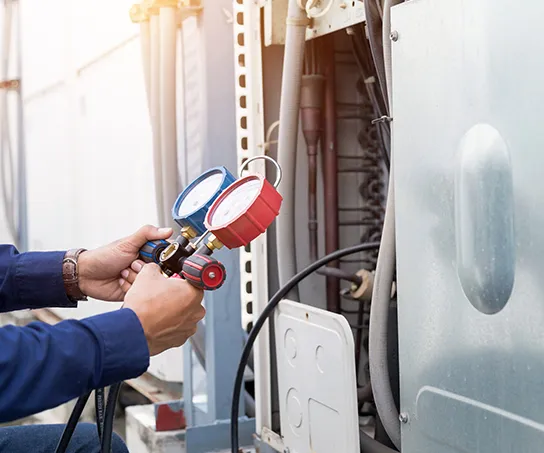
Commercial faults need instrument based diagnosis and access to controls, not part swapping, and we keep the same team across install and repair.
Sized to Load, Not to Area
Occupancy, equipment and solar gain all enter the calculation, which is what separates a system that copes in August from one that merely runs.
One Itemized Price
Equipment, electrical, controls, permit, commissioning and documentation are priced together before the project starts.

What Drives Cooling Load in Different Commercial Buildings?
These planning figures show how far building type shifts the requirement, before any proper calculation is run:
Building Type | Rough Planning Guide | What Dominates the Load |
|---|---|---|
Warehouse or storage | Very low per square foot | Roof solar gain, with little occupancy or equipment heat |
Open plan office | Moderate | People, screens, lighting and glazed elevations |
Retail unit | Moderate to high | Door openings, display lighting and fluctuating footfall |
Restaurant or cafe | High | Kitchen equipment, make up air and dense seating |
Server or comms room | Highest per square foot | Equipment heat only, running every hour of the year |
These are starting points for budgeting conversations. The calculation replaces them, because two restaurants of the same size can differ by several tons on kitchen layout alone.
Is Your Commercial Cooling Keeping Up in August?
Let us survey the building, calculate the real load zone by zone, and tell you whether the problem is capacity, controls or an economizer nobody has looked at in years. You get the figures and an itemized proposal. Site surveys are free across Philadelphia.
Why SEER2 Is the Wrong Number for Commercial Equipment
Commercial cooling is rated by IEER, the integrated energy efficiency ratio, which weights performance across four part load conditions rather than one. That matters because a rooftop unit almost never runs at full capacity, so part load behavior is where the operating cost is actually decided. Chillers use COP and IPLV instead.
Comparing a commercial unit on a residential SEER2 figure, or on a brochure headline, tells you very little, which is why we check the AHRI directory listing before specifying anything. Worth knowing for long term planning: the Department of Energy has issued a rule replacing IEER with new integrated metrics for equipment manufactured from 2029 onward.
Our Step-by-Step Repair Process
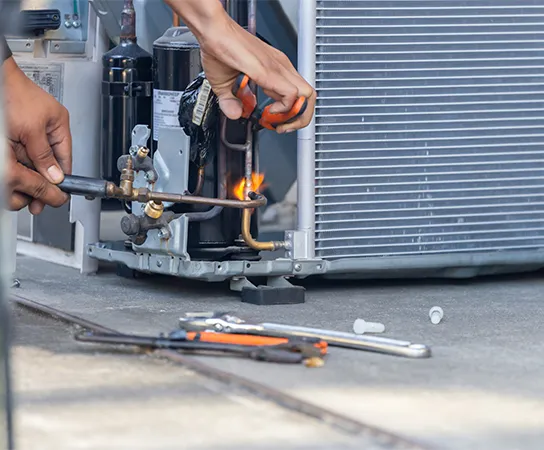
We identify the root cause of your AC fault using advanced tools.
We determine the best repair approach and needed parts for your system.
Faulty components are fixed or replaced to restore efficient performance.
We ensure your commercial AC runs reliably, with proper airflow and temperature.
Can the Tax Position Change With Respect to the Commercial AC Systems?
Frequently, and it is the part of a commercial AC decision most often left to the accountant too late. Commercial HVAC equipment can fall under depreciation treatment, energy efficiency deductions and utility rebate programs, and taken together these can offset a meaningful share of the premium for higher efficiency equipment.
That changes the arithmetic on a specification decision, because a unit that looked expensive on the quote can become the cheaper option once the deduction and the lower running cost are both counted. We provide the equipment data your accountant needs to assess it, and where a commercial HVAC installation covers several units, the effect compounds across the project.